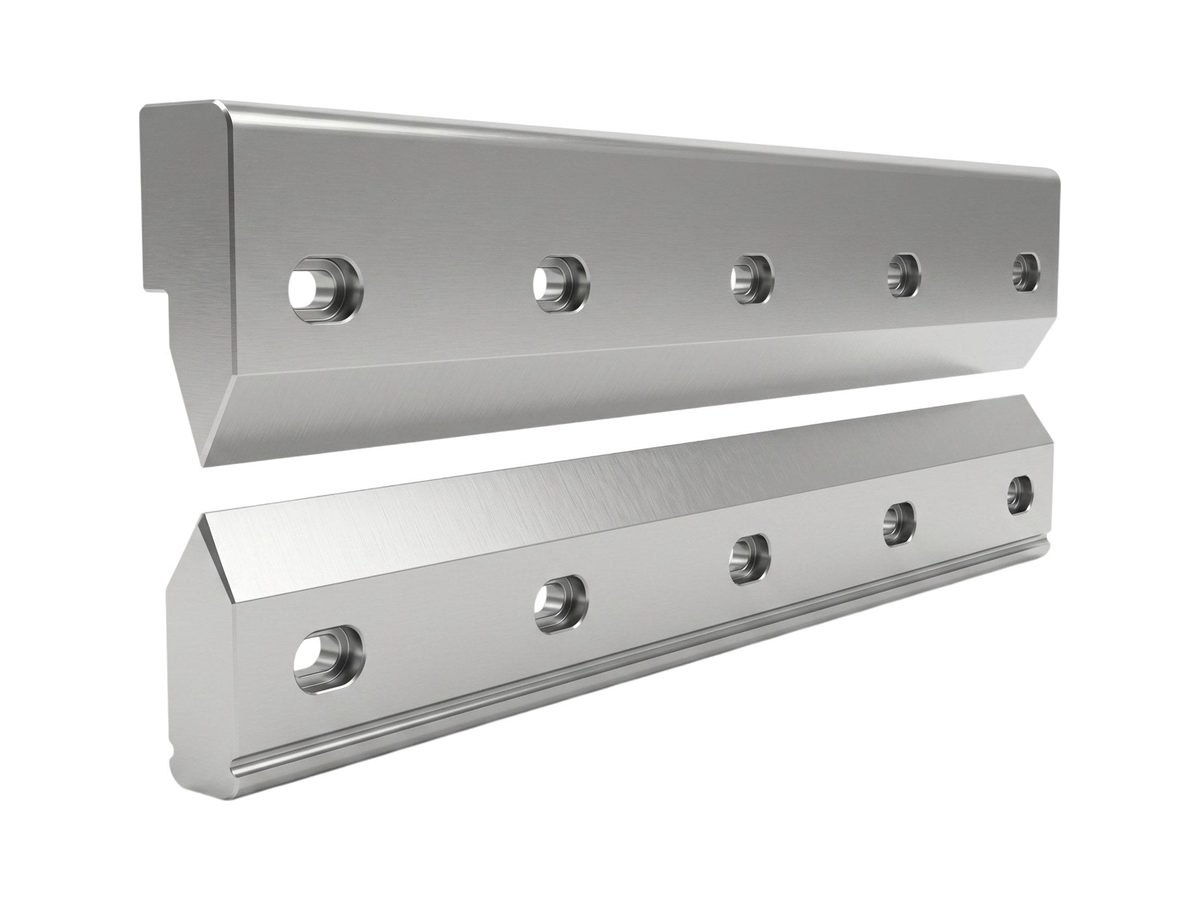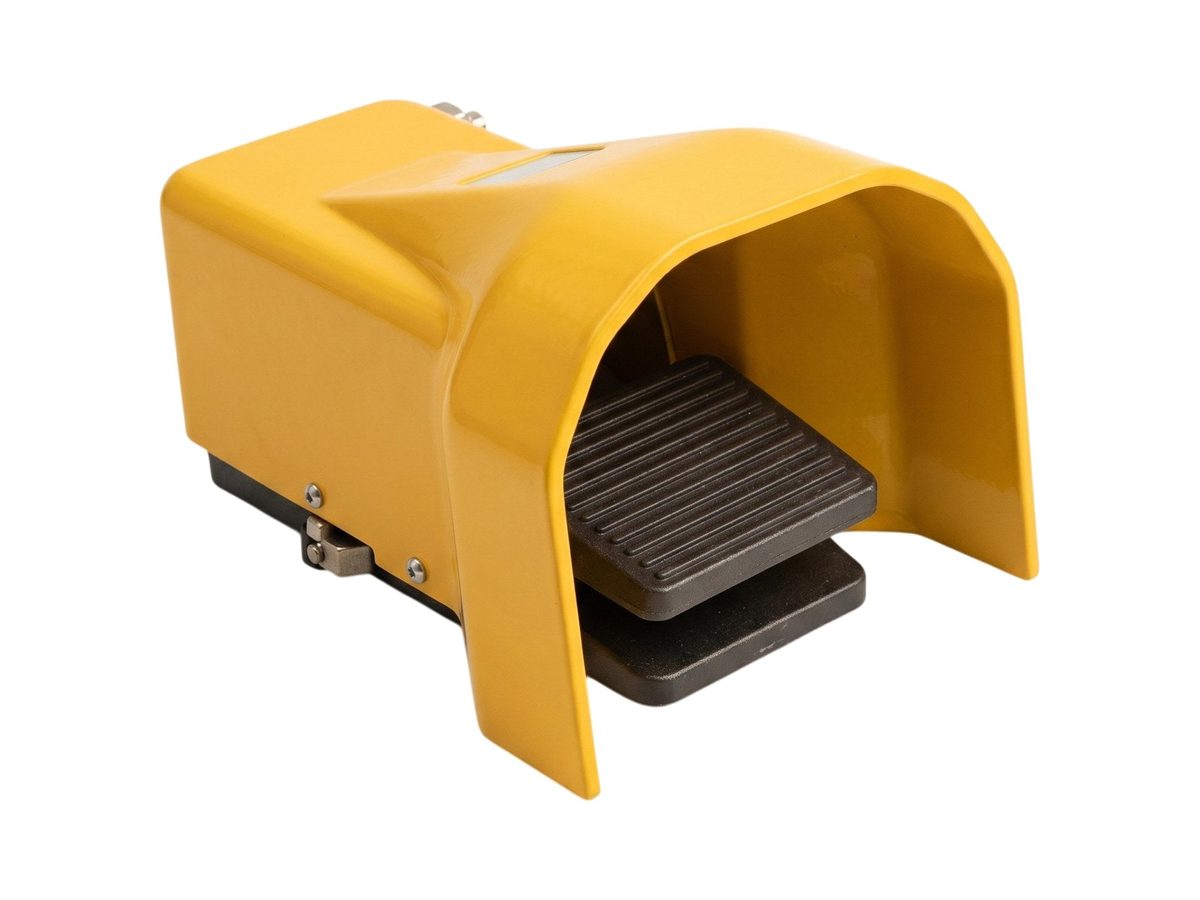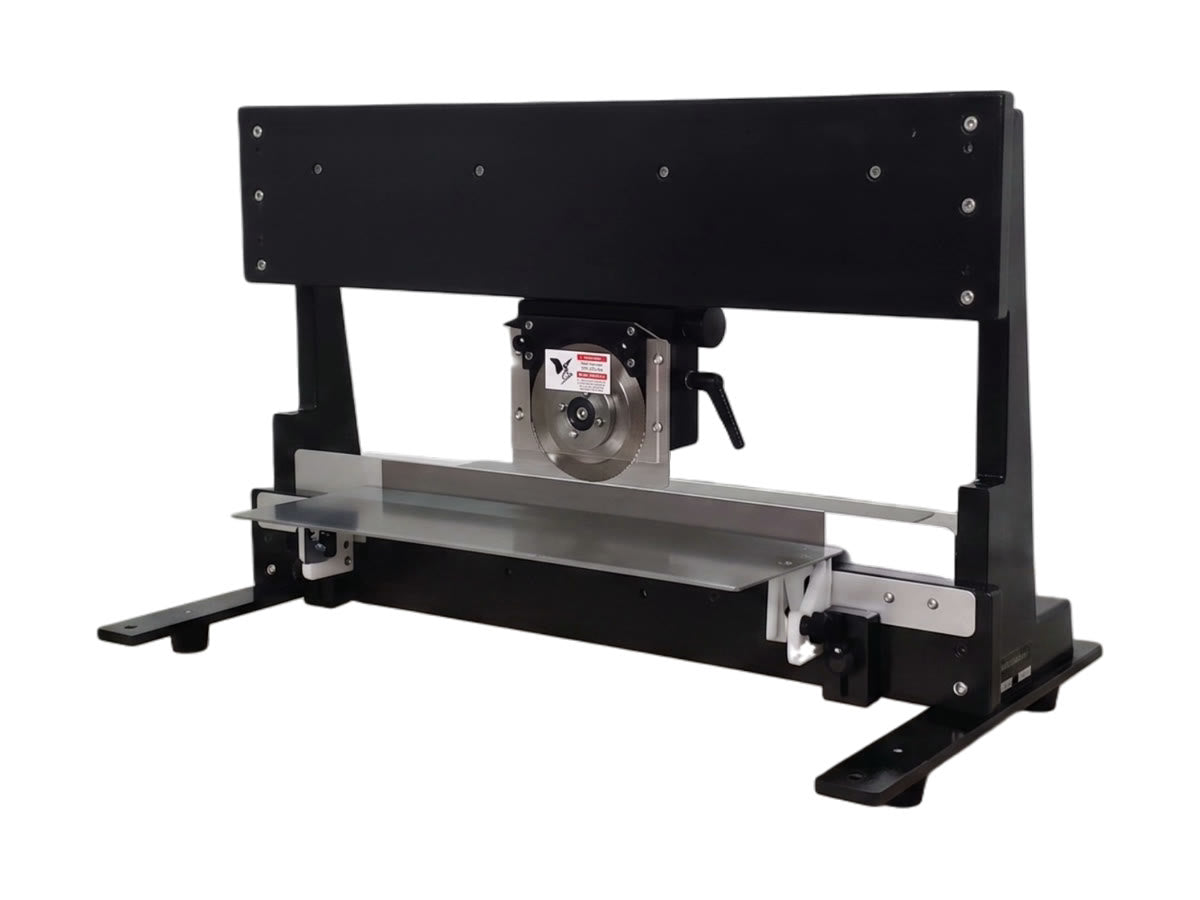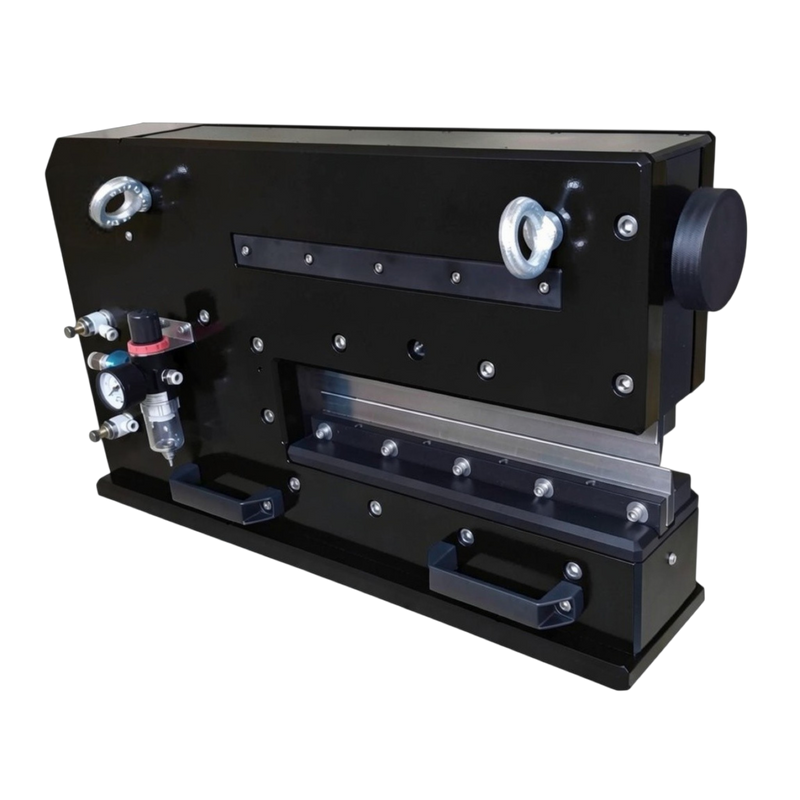
| Cut physics | Panel bent / snapped along the score. High localized tensile stress at the groove. | Hand-wheeled round blade rolls along the score with lateral force; no opposing blade. | Dual linear scissor shear. Two precision-ground V-shaped blades close on the score line in a clean wedge cut. No bending, no rotation, no lateral force on the board. |
|---|
| Board stress (microstrains) | 500–1500 µε typical at the groove. Cracked MLCCs and BGA solder joints common. | 200–600 µε; varies with operator feed rate. | < 200 µε, independent strain-gauge testing. Below the threshold for ceramic-cap micro-cracking. |
|---|
| Components near the score | Risk of cracking parts within 5–10 mm of the cut. | Risk of strike on parts taller than the blade clearance. | 0.5 mm clearance. Components, including ceramic capacitors, can sit as close as 0.5 mm to the score line. |
|---|
| Edge quality / burr | Torn fiberglass, jagged copper, dust along the cut. | Clean on one face, burr on the opposite face; debris. | Clean shear on both faces. No burr, no dust, no secondary finishing. |
|---|
| Cycle time per cut | 2–5 s plus re-orientation; operator fatigue rises across a shift. | 8–15 s per cut along a 300 mm score. | ~2 s per cut, foot-pedal actuated. Designed for high-volume daily throughput. |
|---|
| Repeatability | Operator-dependent. | Feed-rate dependent. | Mechanical Poka-Yoke geometry. The 4 mm blade gap accepts only the V-scored section, can’t insert the wrong way. |
|---|
| Compliance | None. | None. | CE Marked. EN ISO 12100:2010 / Directive 2006/42/EC. Built for IPC Class 3, IATF 16949, FDA / medical, aerospace audit. |
|---|
| Best fit | One-off prototypes; no quality tracking. | Low-volume, single-PN bench work. | Production volume. IPC Class 3, medical, automotive, aerospace contract manufacturing. |