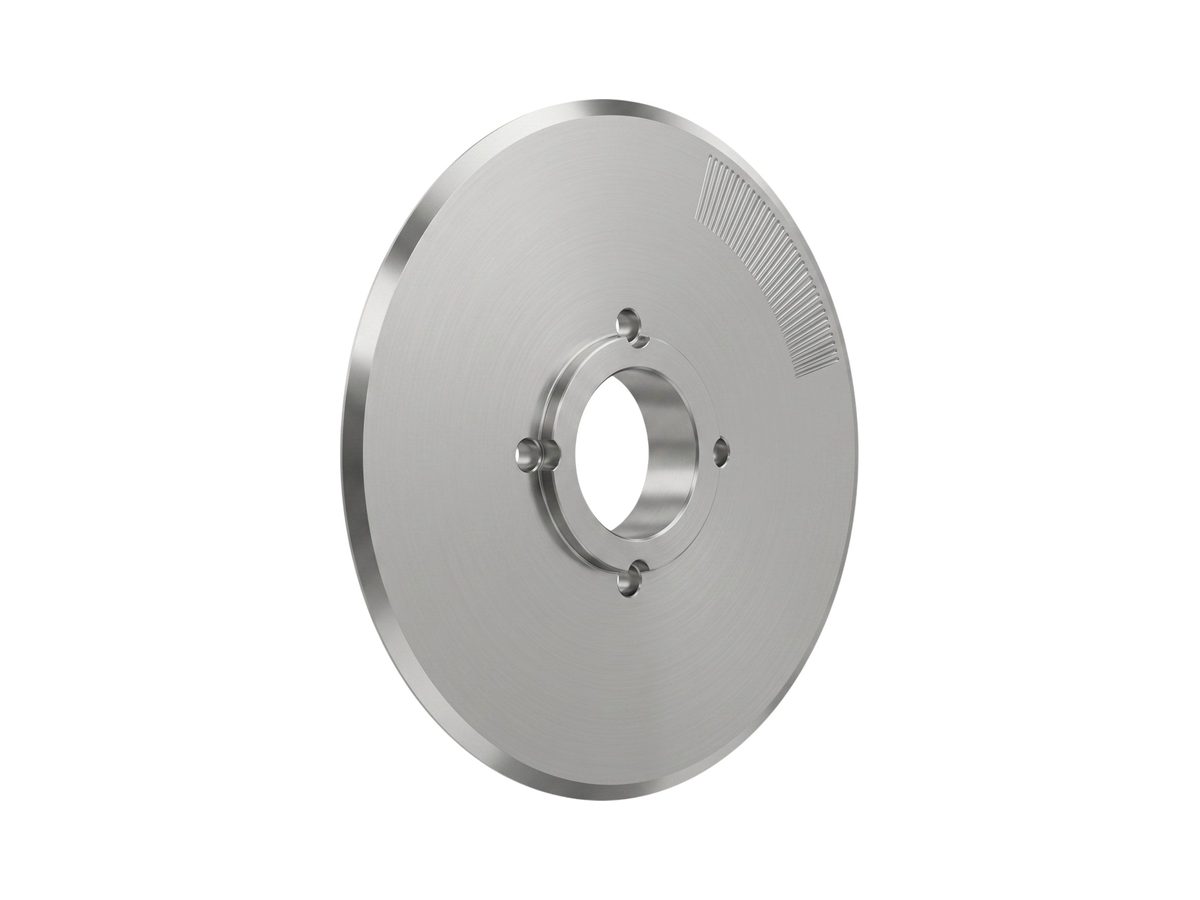
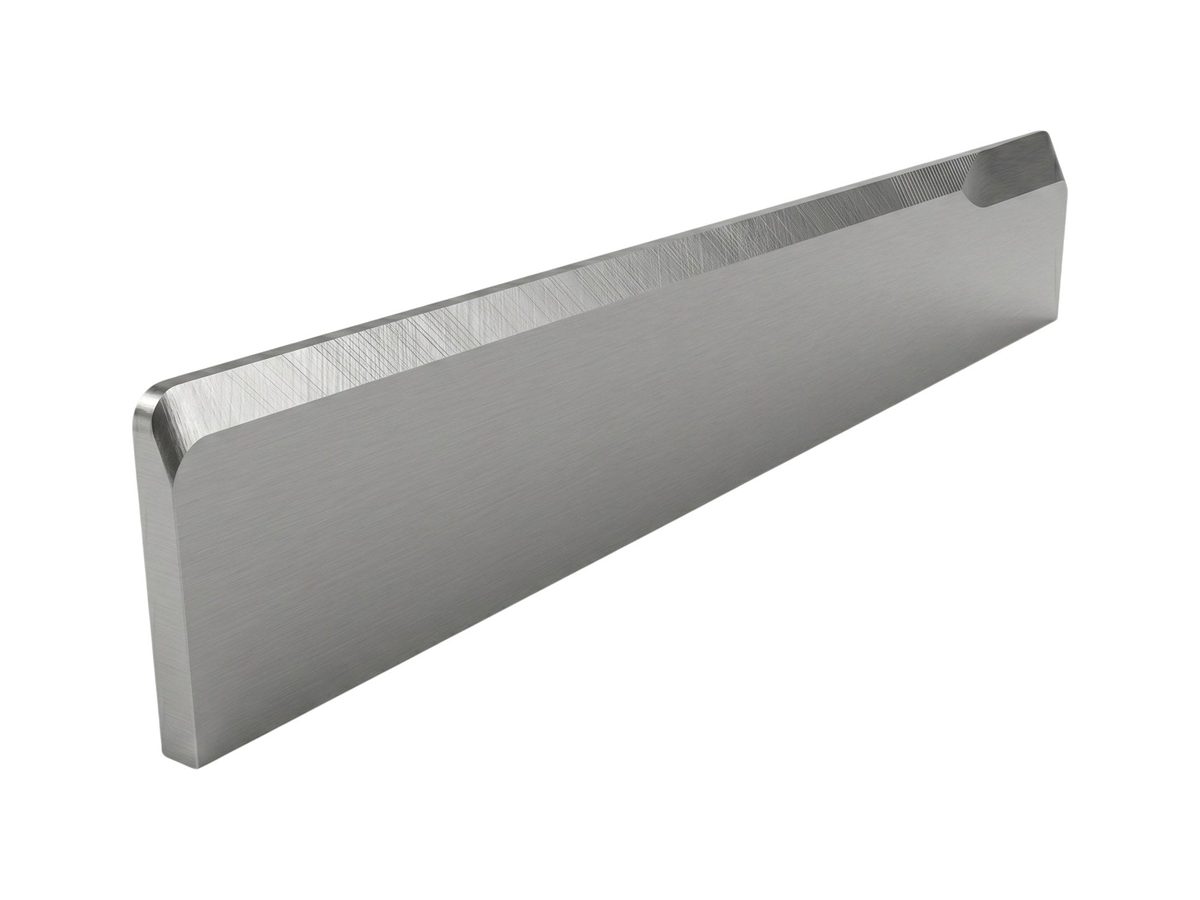
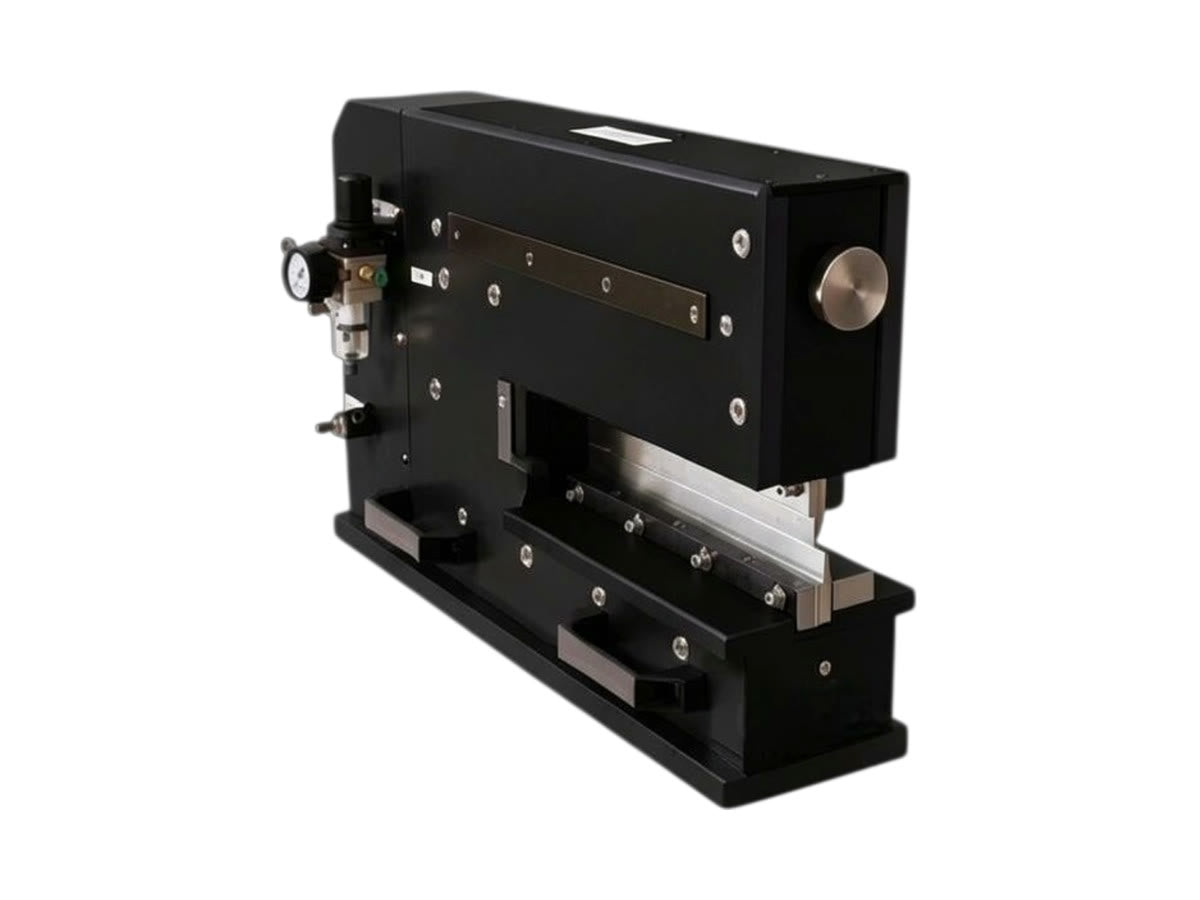
| Cut physics | Panel bent / snapped along score. High localized tensile stress at the groove. | Hand-wheeled round blade rolls along the score with lateral force. No opposing blade. | Scissor shear. Circular blade rides over a stationary linear blade. Cut goes through the V-groove, not around it. |
|---|
| Stress near BGAs & ceramics | Highest. Bending moment radiates several cm; micro-cracks in MLCCs and BGA joints. | Moderate. Lateral roll-pressure transmits into copper traces. | Low. Opposing-blade shear isolates force to the groove. |
|---|
| Edge quality / burr | Torn fiberglass, jagged copper, loose dust. Secondary sanding routine. | Clean on one face, burr on the opposite face; debris along the cut. | Clean shear on both faces. No burr, no dust, no secondary finishing. |
|---|
| Cycle time per cut | 2–5 s plus re-orientation; operator fatigue rises across a shift. | 8–15 s per cut along a 300 mm score. | 3–6 s draw across 460 mm. |
|---|
| Repeatability | Operator-dependent; edge quality varies person-to-person. | Feed-rate dependent. Two operators produce different edges. | Carriage-guided. Blade path is fixed by the rail; end-lock stops define travel. |
|---|
| Components crossing score | Not feasible, the bend breaks any bridging component. | Not feasible, the rolling blade collides with standoffs. | Shape C linear blade supports it. Unique among this trio. |
|---|
| Utilities required | None. | None. | None. No air drop, no electrical outlet. |
|---|
| Best fit | One-off prototypes; labs where edge quality isn’t tracked. | Low-volume, single-PN bench work where Class 2 edges are acceptable. | Prototype & NPI, rework, mixed-PN CMs, lab / R&D, no-shop-air facilities. |