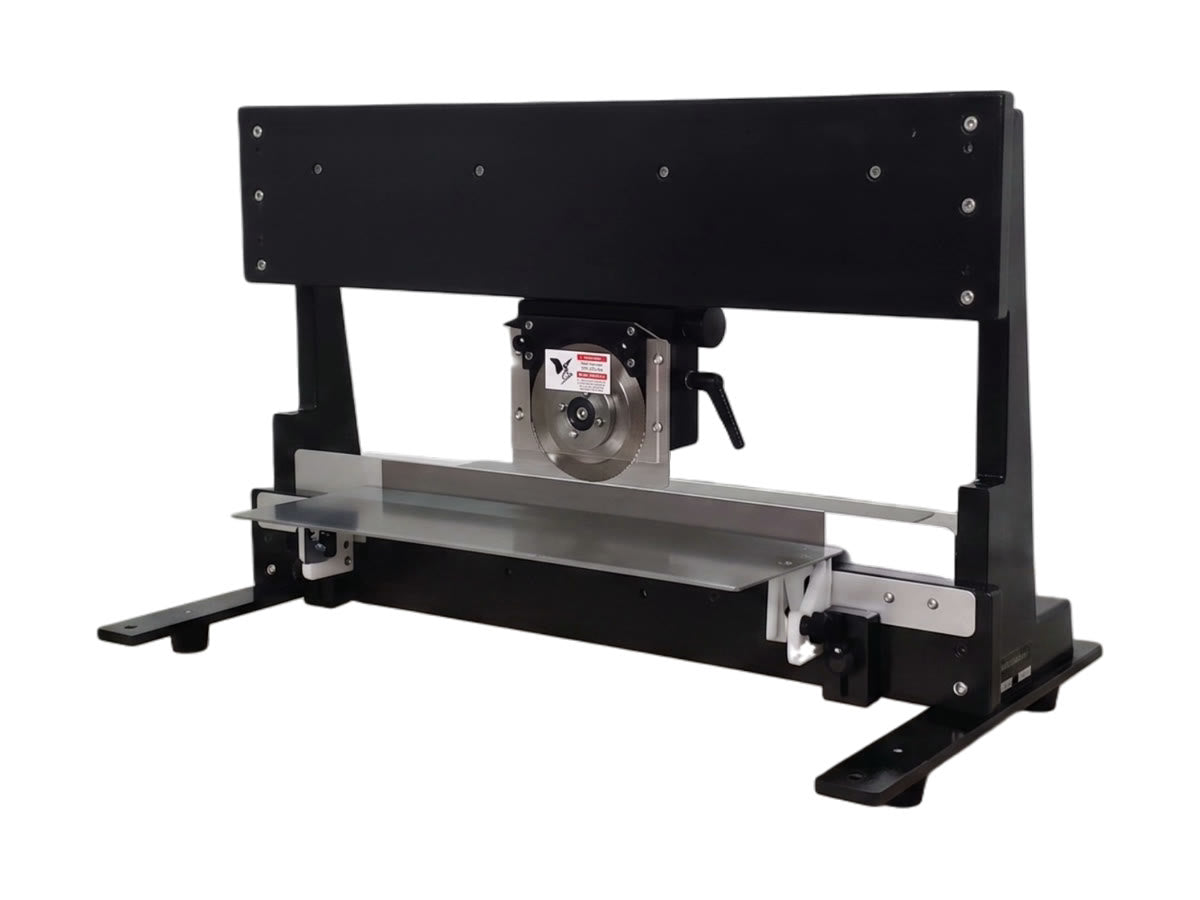
Separate every board. Break nothing.
PCB depaneling machines

Separate every board. Break nothing.

A manual depanelizer for mixed runs and a pneumatic machine for production volume, both cutting v-scored panels along the score — measured under 200 µε of board stress.

460 mm Longest single-pass cut
< 200 µε Measured board stress
CE EN ISO 12100:2010
2 Machines, one cut philosophy

Two machines, plus the blades that keep them cutting.

MACHINES + BLADES

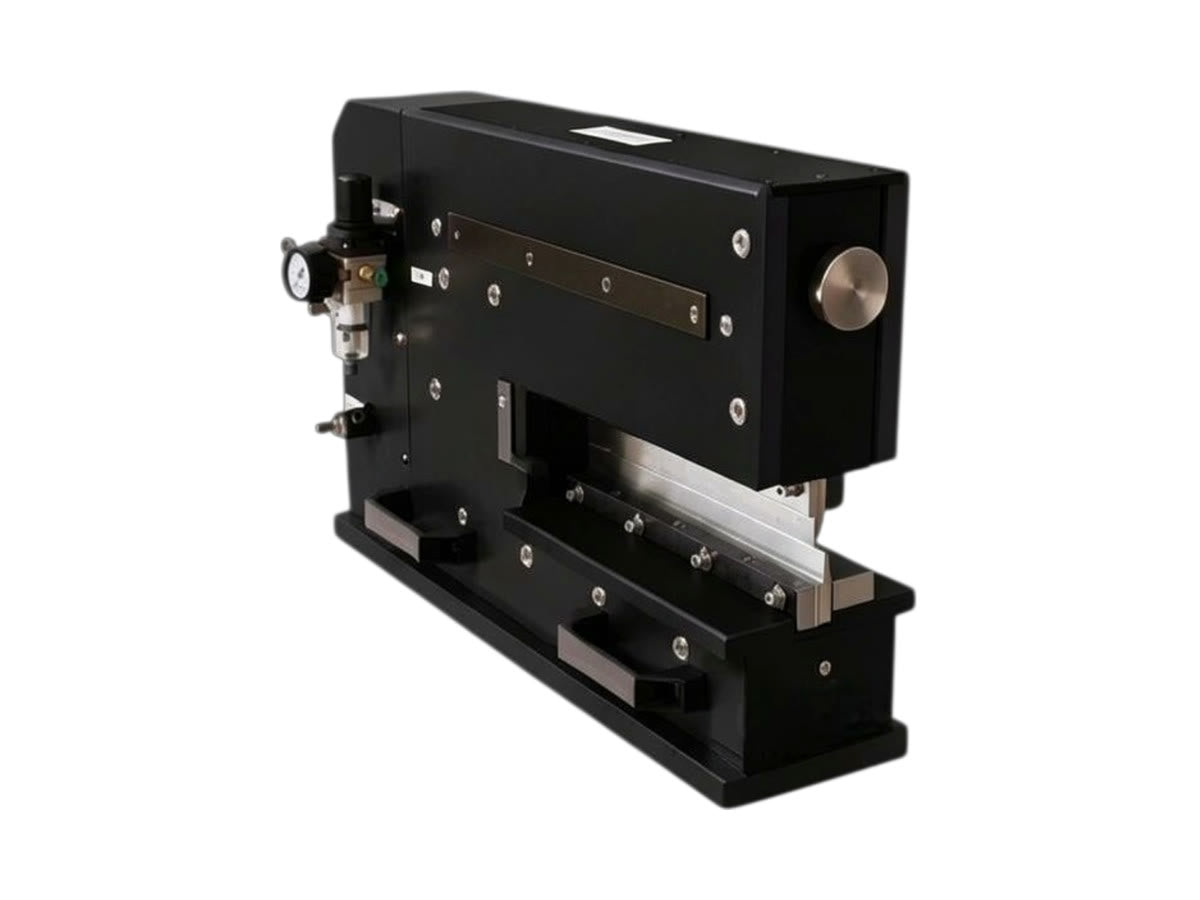
Two V-score depanelers.

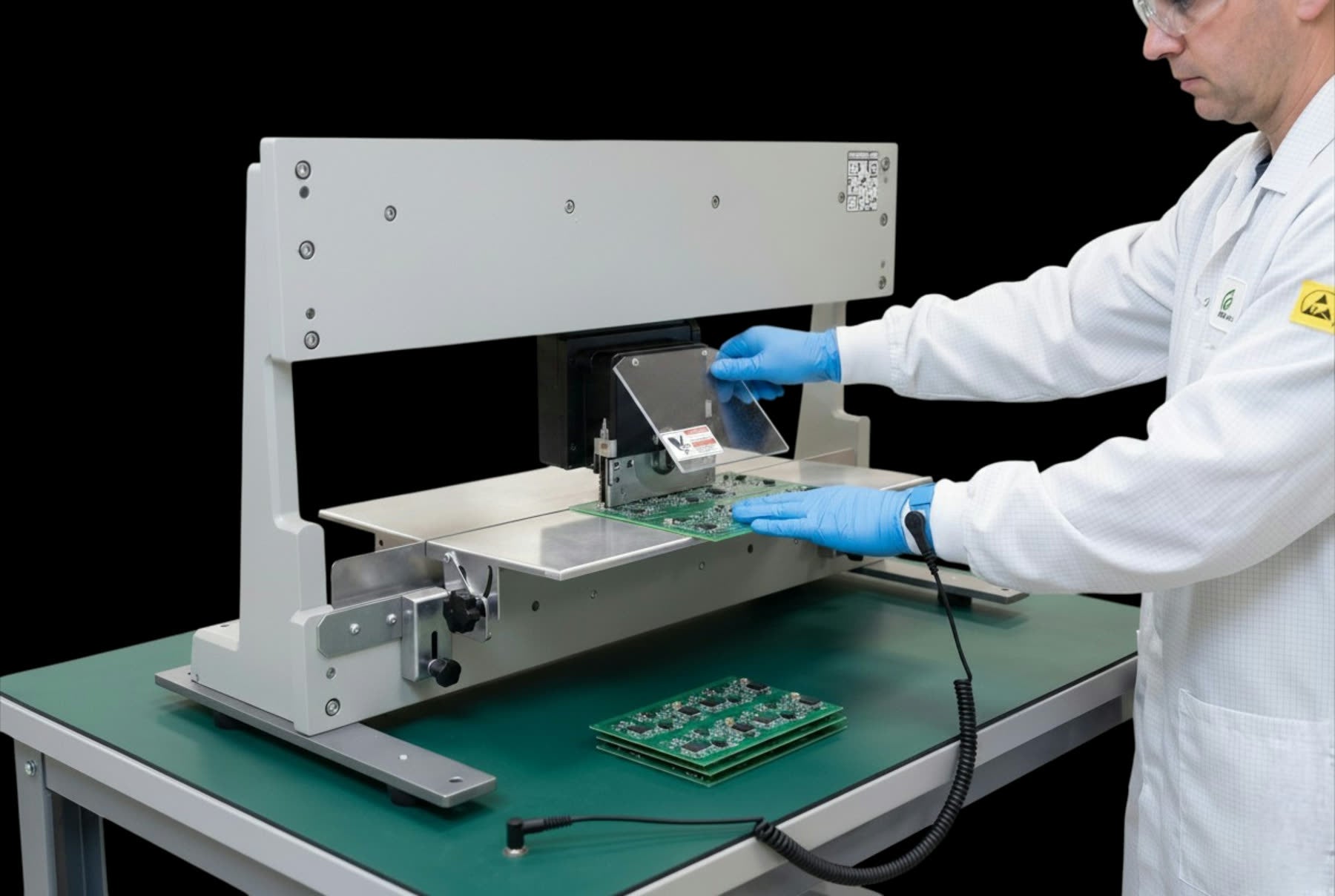
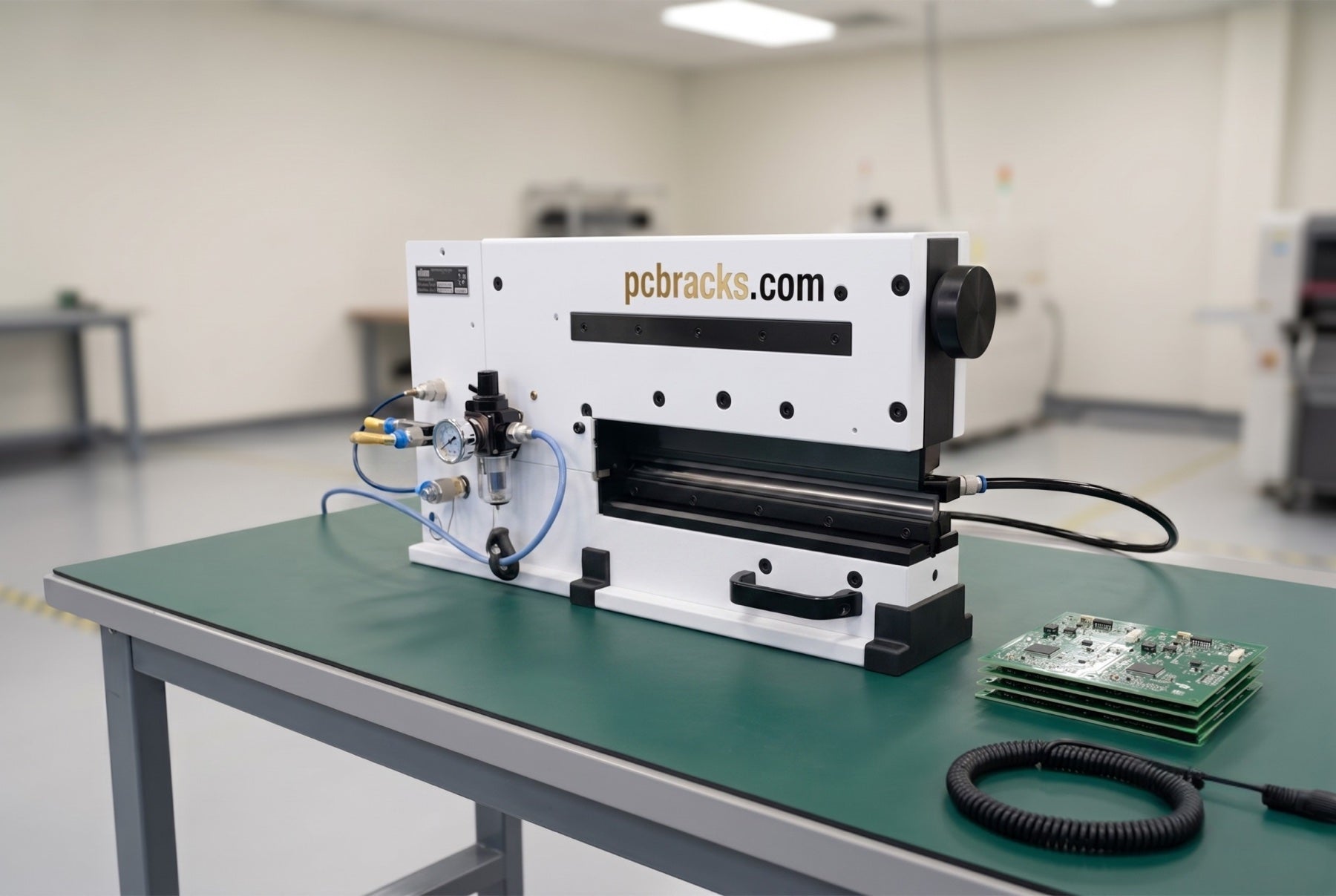
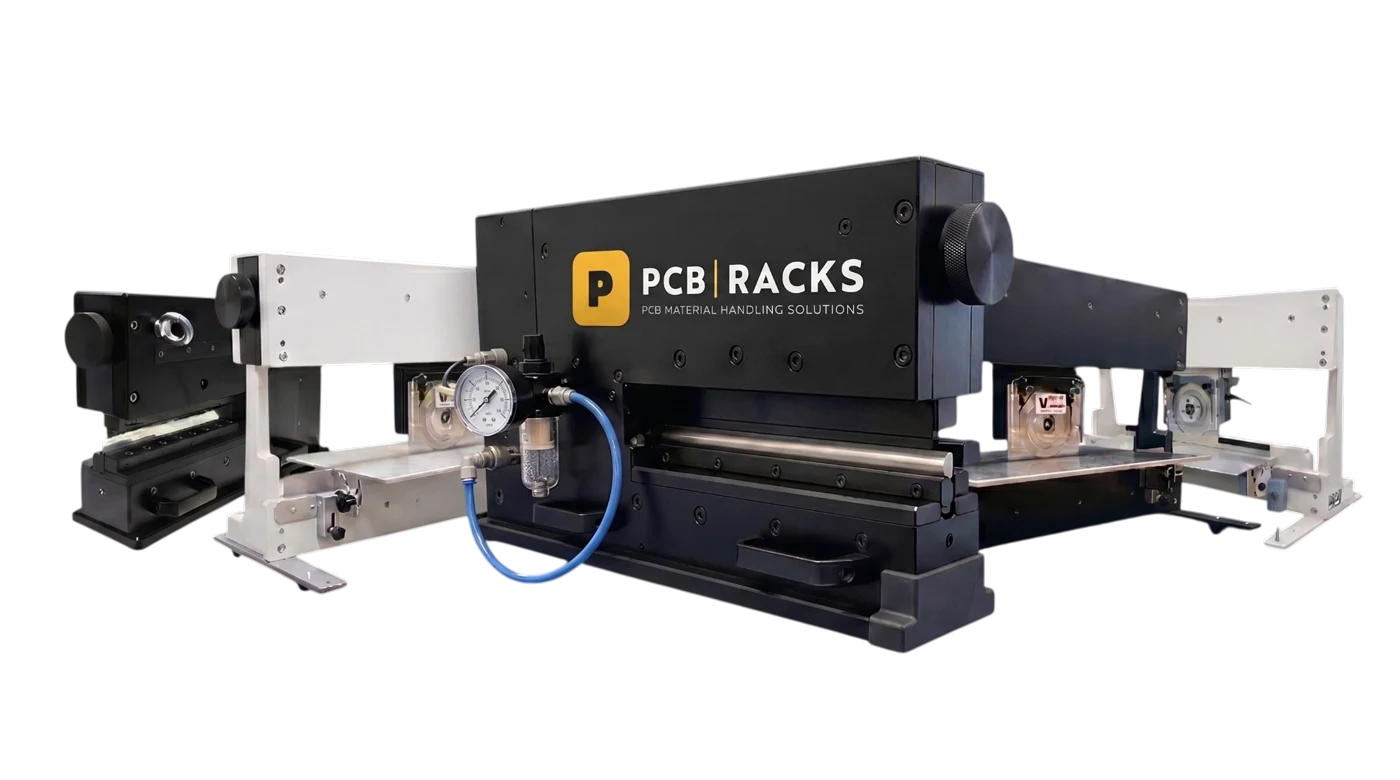
Pick by volume: the manual VPD3-1M for low-mix, NPI and mixed part numbers — no air, no power, 460 mm cut. The pneumatic VPD5-330 for production volume — foot pedal, both hands on the panel, 330 mm cut. Both are V-cut PCB depaneling machines for v-scored panels, full specifications in the tables below.

All specifications for both machines are in the full table

Tell us your panel. We'll name the machine.

Two numbers qualify every V-scored panel: the longest score you need to cut, and the board thickness. Enter them, the finder returns the machine that shears it clean, and the one to step up to.

Not sure about a spec? Ask an engineer answers within one business day.

Rather describe it than measure it? Ask Sam, he walks you to the exact part number.

Find your depaneler
Units
Blades & spares
Stocked in the USA for every VPD in the field
Shop spares

Machines are built to order, lead time and freight are quoted with your PO. Tell us your line rate and we'll spec it. Blades & spares ship from US stock.

In motion

The machine, from every angle.

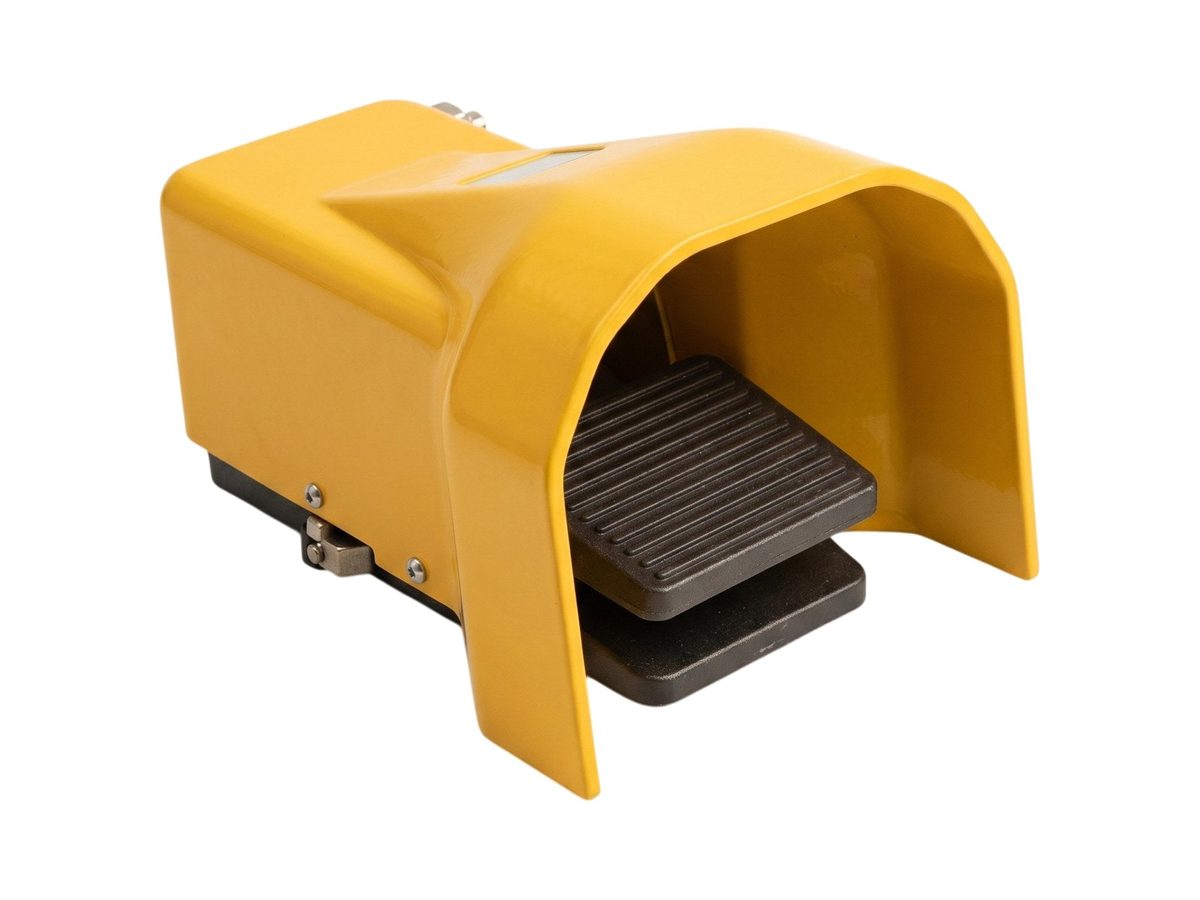
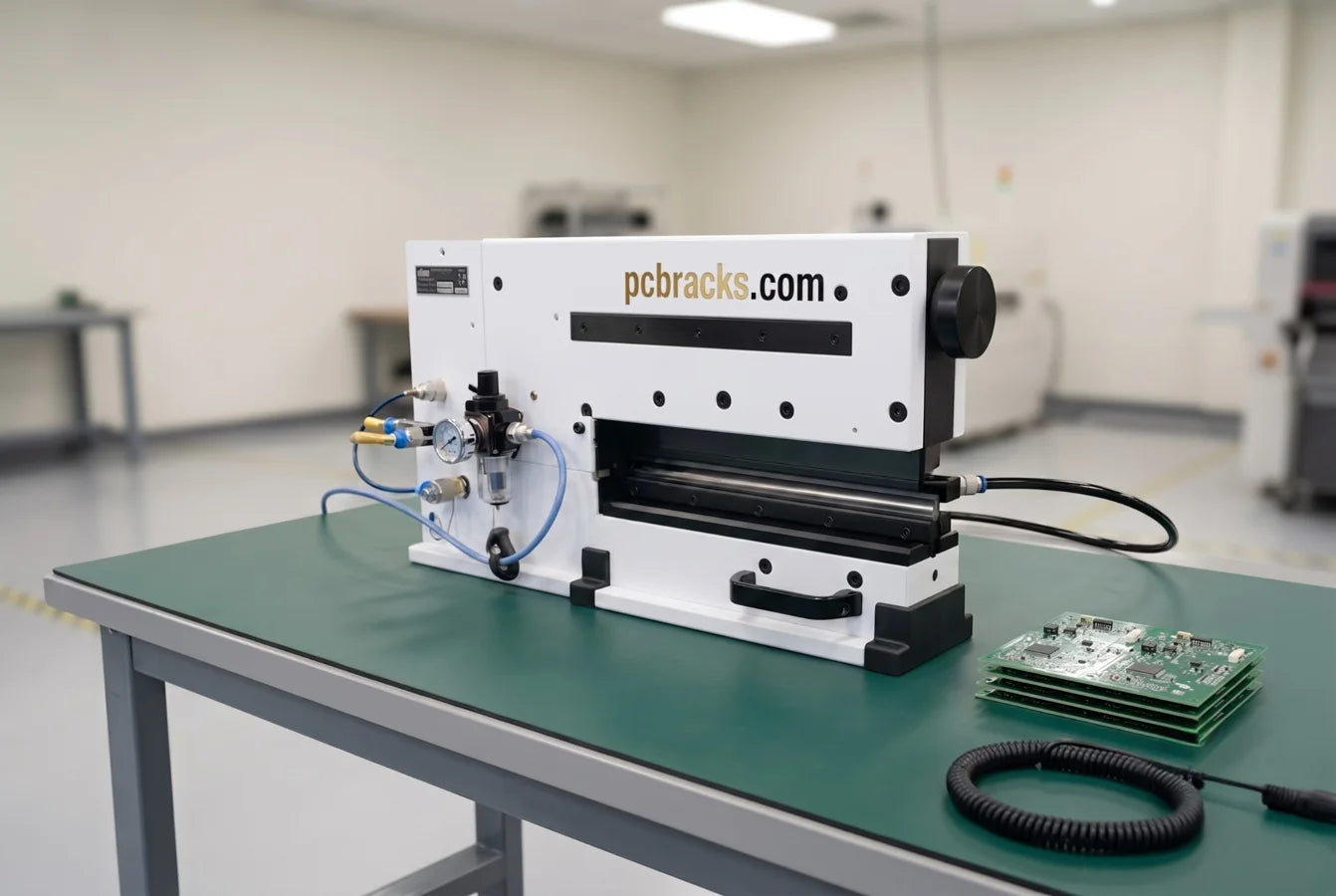
Twin linear blades, pneumatic cylinder, foot-pedal control, OSHA enclosure. Blades and pedals stay stocked in the USA.

Full specifications

Where these depanelers are used

The cut step between test and pack-out, on lines where a cracked joint found in the field costs more than the machine.

Aerospace & defense (IPC Class 3)Automotive (IATF 16949)FDA-regulated medicalHigh-reliability EMSNPI & prototype labsAerospace & defense (IPC Class 3)Automotive (IATF 16949)FDA-regulated medicalHigh-reliability EMSNPI & prototype labsAerospace & defense (IPC Class 3)Automotive (IATF 16949)FDA-regulated medicalHigh-reliability EMSNPI & prototype labs
  • 1 After AOI, before pack-out Boards arrive tested and joined; the shear is the last operation that can still break them.
  • 2 Benchtop, not in-line A standalone cell on any ESD bench, no conveyor handshake, no PLC integration.
  • 3 Where BGAs sit near the score Measured stress stays below the threshold that cracks ceramic capacitors and solder joints.
  • 4 Mixed-part-number shops The manual machine resets its blade gap in seconds for a different panel every week.

Full specifications, side by side.

Specification VPD3-1MManual V-score depanelerManual VPD5-330Pneumatic V-score depanelerPneumatic
Cut & drive
Cut methodManual scissor shear, circular blade rides a stationary linear bladeDual linear V-blades close on the score, pneumatic down-stroke
OperationHand-drawn carriageFoot pedal, hands stay on the panel
Panel envelope
Max separation length (mm)460330
Board thickness≤ 1.5 mm / ≥ 2 mm by blade0.6 – 2.54 mm
Score depth / remaining web> 0.25 mmRemaining web 0.6 – 1.30 mm
Component height, topside33 mm20 mm
Component height, bottomside25.4 mm20 mm
Component clearance to score≥ 2 mm≥ 0.5 mm, including ceramic capacitors
Board materialFR4, single- or double-sidedFR4, standard + high-Tg
Stress & mistake-proofing
Measured board stressOperator-dependent (manual draw) < 200 µε independent strain-gauge tested
Mistake-proofing 4 mm 4 mm blade gap only accepts the scored section
Machine & compliance
UtilitiesNone, no air, no powerShop air, 0.4 – 0.6 MPa (≈ 85 PSI)
Net weight35 kg125 kg
Footprint (L × W × H) (mm)784 × 460 × 530750 × 230 × 395
Compliance CE EN ISO 12100:2010
Request a quote Request a quote

Both machines cut pre-scored V-groove FR4 panels only, not tab-routed or unscored formats. Machines are built to order: lead time and freight are quoted with your PO.

Top features, machine by machine

Tap a feature to see what it means on your line. Six on the manual machine, seven on the pneumatic.

VPD3-1MManual
  • A circular blade rides a stationary linear blade and you draw the carriage by hand, the longest single-pass cut in the range.
  • A new part number every week is not a problem: the gap and tilt reset without stripping the machine down.
  • The offset linear blade clears parts sitting over the cut line, the pneumatic machine cannot do this.
  • Thin boards, thick boards and component-clearance work, all on the same machine.
  • No air line, no electrical drop, no dedicated cell. It runs anywhere you can put 35 kg.
  • Light enough to shift between stations on a hand trolley when the work cannot come to the machine.
VPD5-330Pneumatic
  • Two precision-ground blades close on the score line in one wedge cut, driven by a pneumatic cylinder.
  • Independent strain-gauge testing put average stress in the 34–117 µε band, below where ceramic caps and BGA joints crack.
  • The operator's hands stay on the panel; flow valves tune the up and down strokes independently.
  • Only the scored section fits the gap, so the panel cannot be loaded the wrong way round.
  • The gap is set once with a feeler gauge and every board in the lot then sees the same cut.
  • Components can sit half a millimetre from the groove, ceramic capacitors included.
  • Documentation ships on request for IATF, FDA and aerospace QMS audits.

Blade systems

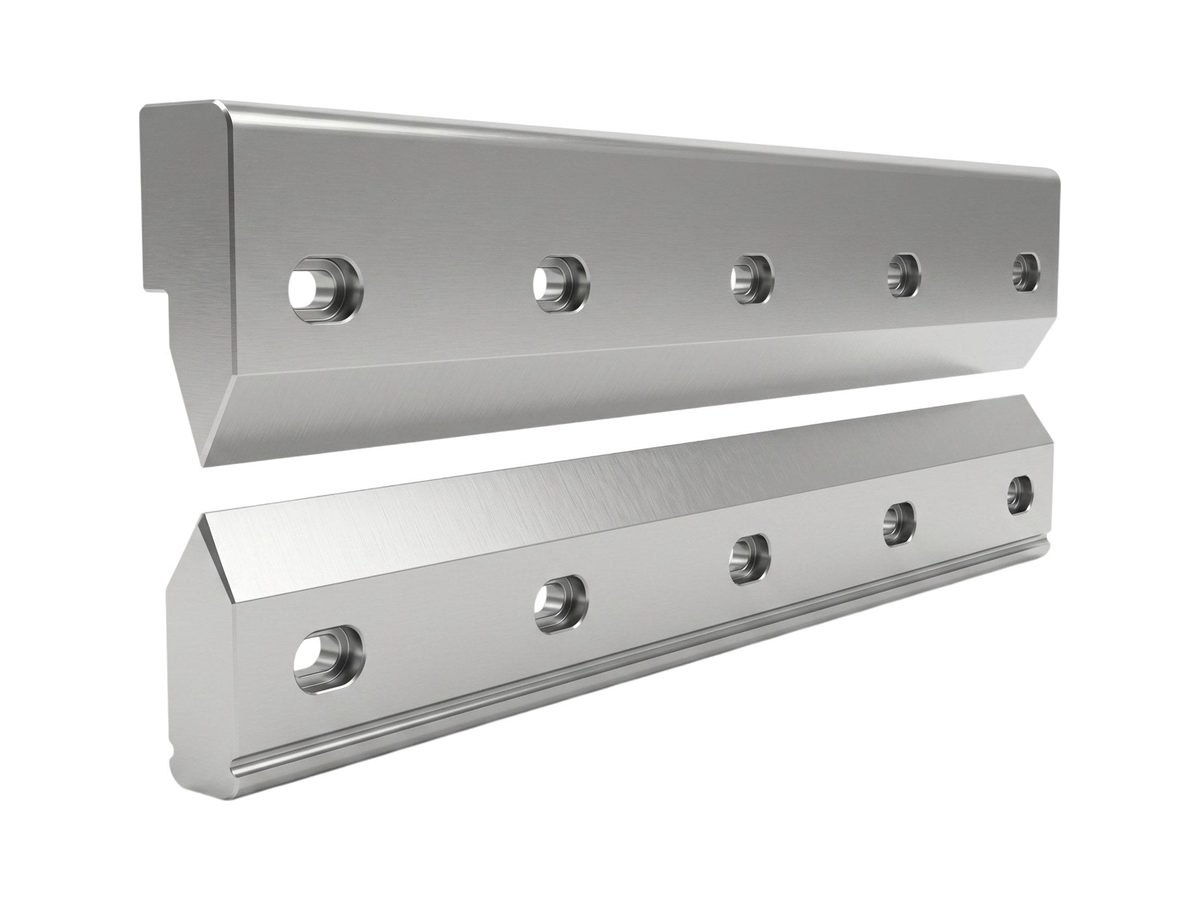
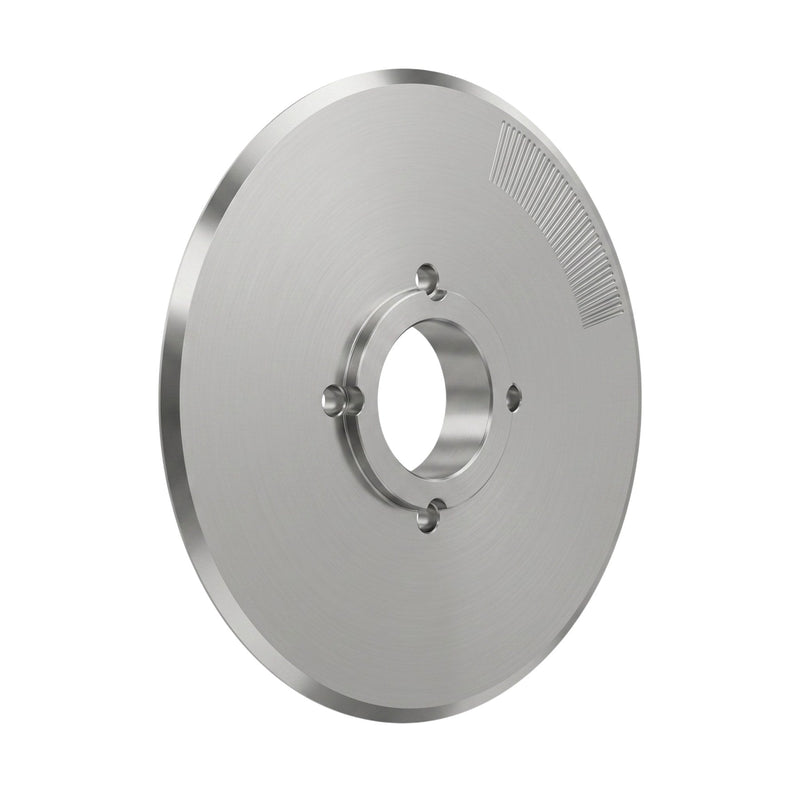
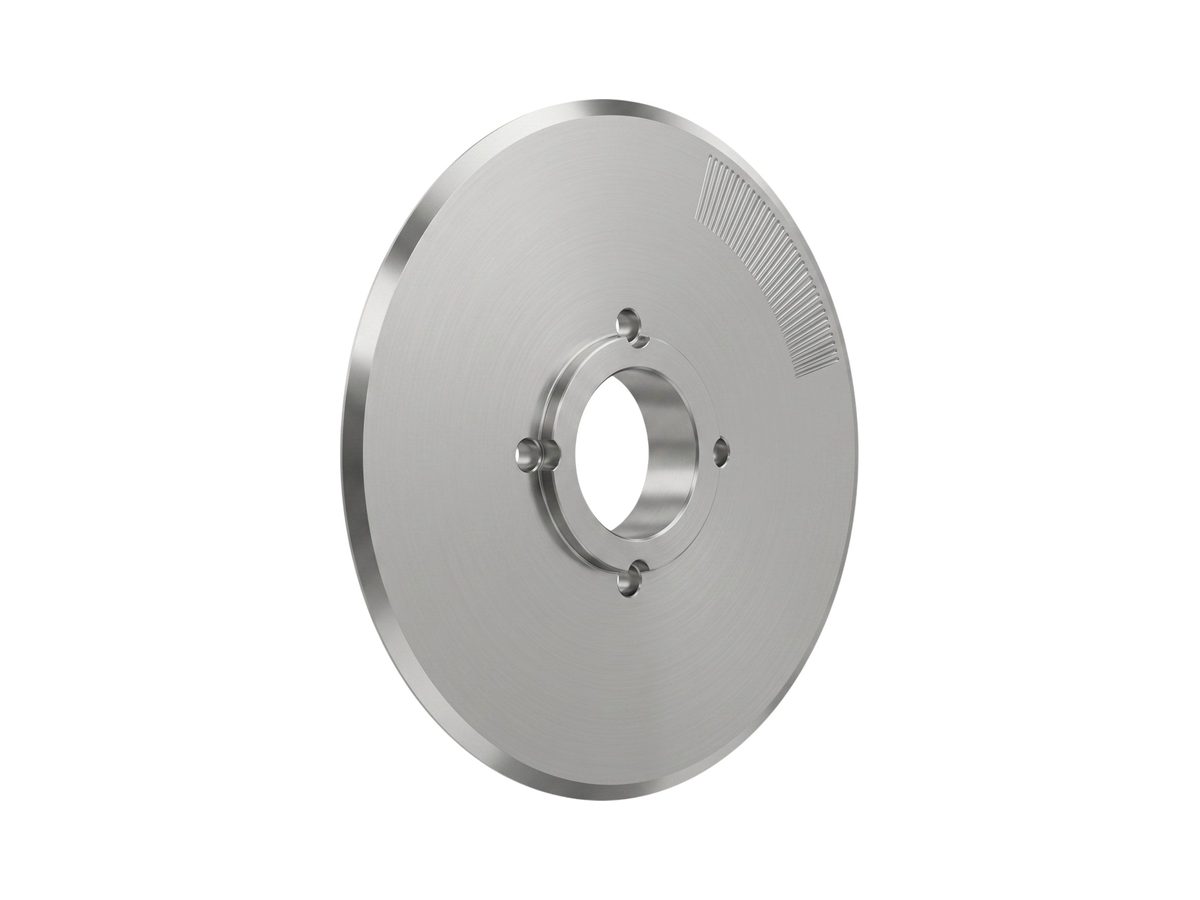
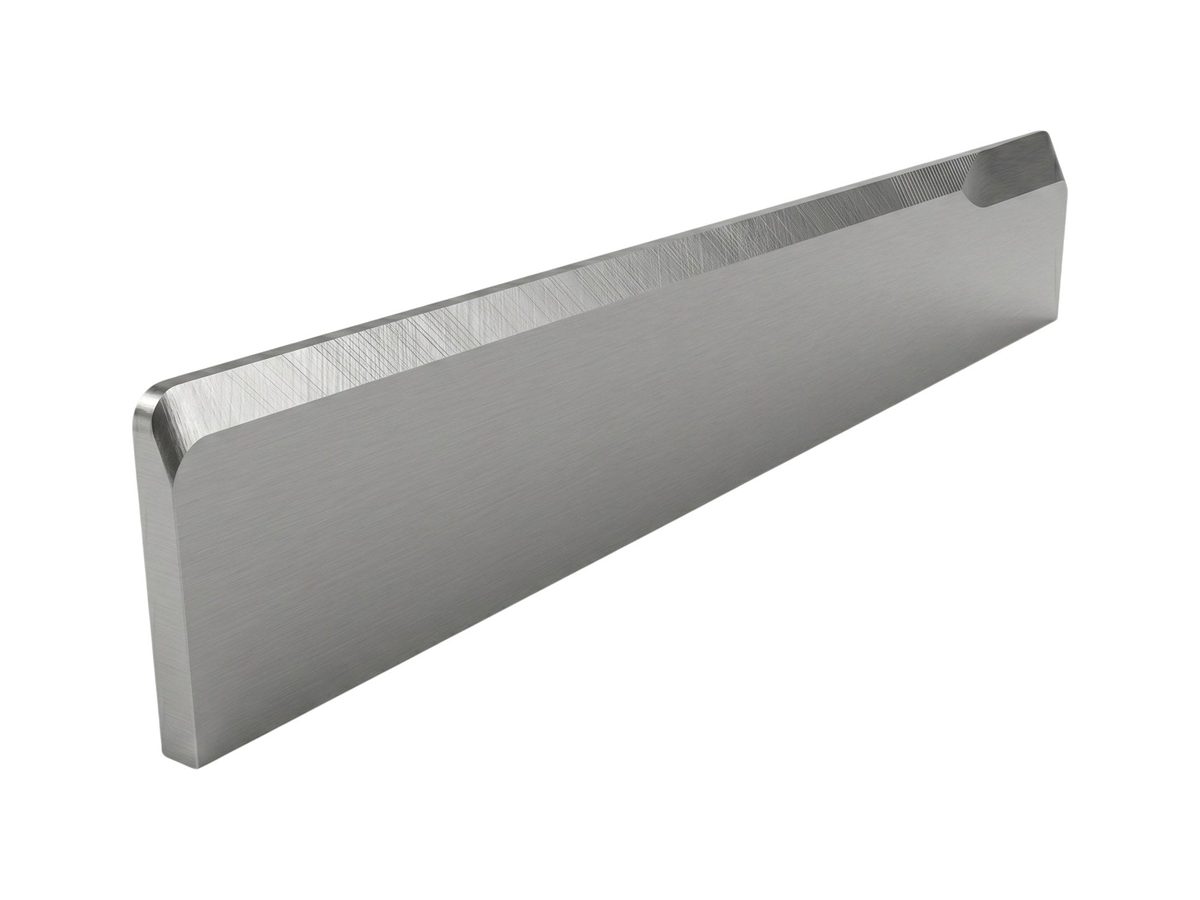
The VPD3-1M's interchangeable profiles cover thin boards, thick boards, and components crossing the score line. The VPD5-330's paired linear blades hold one geometry for every cycle, gap set with a 0.05 mm feeler gauge.

VPD3 blade shapes A, B, C
VPD3-1M · Interchangeable profiles
AThin boards, ≤ 1.5 mm · Standard profile for everyday V-scored panels.
BThick boards, ≥ 2 mm · Deeper wedge for heavy copper and thick laminate.
CComponents across the score · Offset profile clears parts sitting over the cut line, VPD3-1M only.
VPD5-330 dual linear blade pair
VPD5-330 · Dual linear
One geometry, every cycle · Precision-ground pair, 4 mm max gap. Custom profiles quoted from your panel drawing.
Typical service life: 50,000+ cycles per set · we've seen sets run past 100,000. Actual life varies with panel material, thickness, and score depth.

Where it sits on the line

Solder paste Pick & place Reflow AOI / test Depaneling Conformal coat Final test & pack

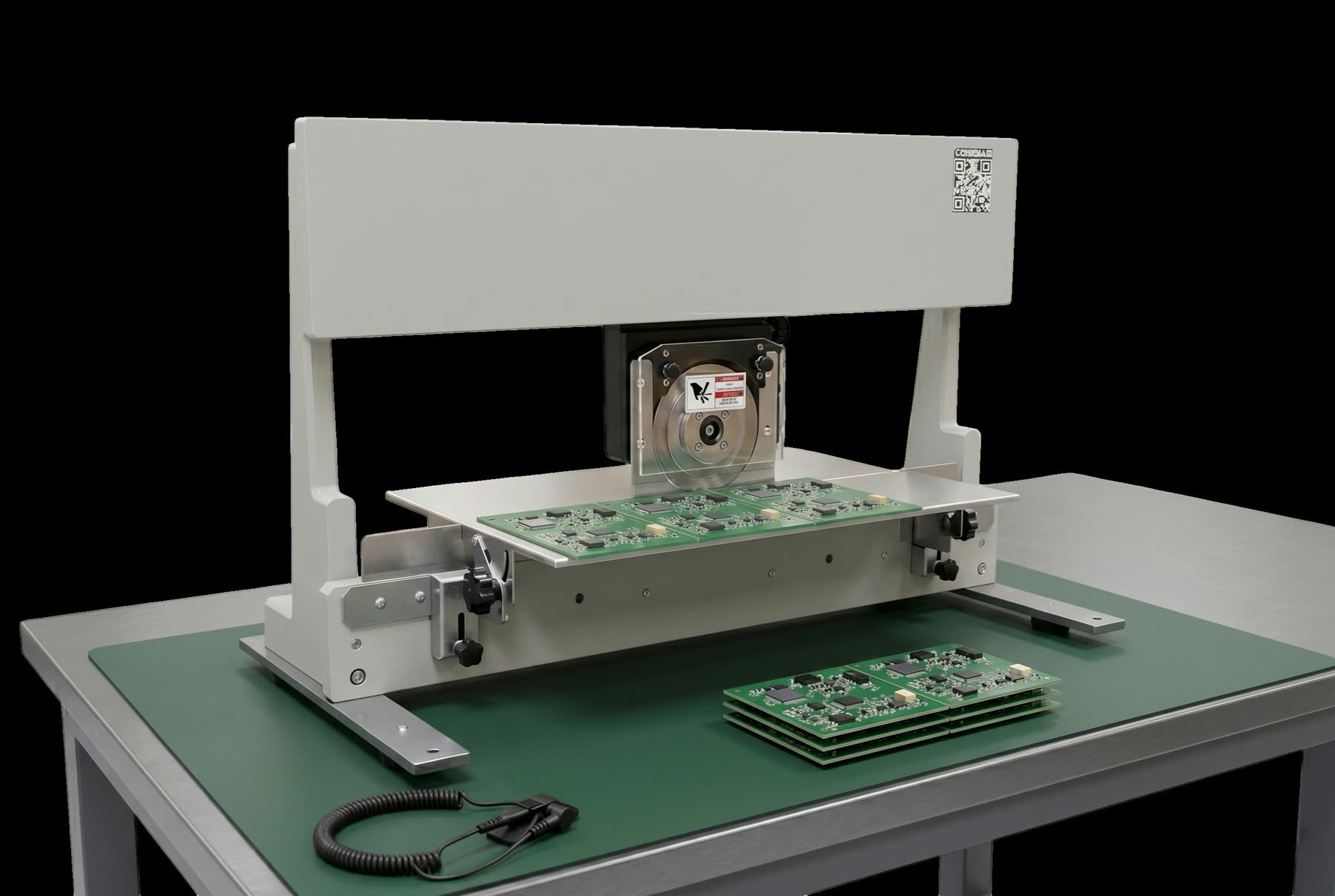
Benchtop, hand-fed workstations, not in-line conveyor modules. They sit on any ESD bench downstream of reflow, no conveyor handshake required.

Compliance

Audit-ready
  • CE Marked (VPD5-330). EN ISO 12100:2010 / EU Machinery Directive 2006/42/EC. Documentation available on request for QMS audits.
  • Mil-Spec compatible. Cut geometry meets B-81705-B handling requirements when paired with ESD-safe accessories.
  • RoHS-friendly construction. Anodized aluminum frame, hardened tool-steel blades, no leaded solders or restricted plating.
  • Independent strain-gauge testing. Average board stress measured in the 34–117 microstrain range, well below the < 200 microstrain threshold for ceramic-cap micro-cracks.

Bench & cell fit

Benchtop · hand-fed
  • A benchtop, standalone cell. Manual shear-cut workstations, not in-line conveyor modules, they sit at any post-AOI / post-ICT bench downstream of reflow.
  • Compact footprint. Drops onto a standard ESD workbench, no PLC, no conveyor handshake. The VPD3-1M needs no utilities at all; the VPD5-330 runs on shop air.
  • Operator-side ESD safety. Anodized aluminum chassis bonds to bench ground, pairs with conductive mat, wrist strap, and smock.
  • Fits any depanel-after-test workflow. Whether the line ends in a manual unloader, an inspection bench, or a stocking cart, the VPD slots in as the cut step before pack-out.

A note on words: anti-static, static-safe, ESD-safe, conductive and dissipative all describe the same job — bleeding charge away before it reaches a component. The number that matters is surface resistance, and it is printed on every spec sheet on this page.

Blades & wear parts.

Genuine OEM blade sets, pedals, and service parts for both machines, stocked in the USA, lowest price first.

VPD3-1M

Spare parts reference View machine →
VPD3-1M Spare parts reference Open the full reference sheet ↗
Controlled spare-parts reference for the VPD3-1M. Callout letters match the index below.

Every part on the VPD3-1M diagram

Callouts match the plate above. Parts with a PCBRacks part number ship from the USA; the rest are quoted against your machine model and serial number. Callout letters repeat between the two machines, always tell us which machine you run.

Callout Description Qty PCBRacks part no.
M13Adjustable handle 1 Quote on request Request →
M14Linear blade 1 VPD3-1LB In stock
M15Circular blade 1 VPD3-1CB In stock
M19Lock screw, vertical adjustment 1 Quote on request Request →
M20Circular blade guides 1 set Quote on request Request →
M21Handle 1 Quote on request Request →

VPD5-330

Spare parts reference View machine →
VPD5-330 Spare parts reference Open the full reference sheet ↗
Controlled spare-parts reference for the VPD5-330. Callout letters match the index below.

Every part on the VPD5-330 diagram

Callouts match the plate above. Parts with a PCBRacks part number ship from the USA; the rest are quoted against your machine model and serial number. Callout letters repeat between the two machines, always tell us which machine you run.

Callout Description Qty PCBRacks part no.
M01Linear blade (matched pair) 1 pair VPD5-330LK In stock
M12Lower blade support (1) 1 Quote on request Request →
M13Lower mounting block 1 Quote on request Request →
M14Lower blade support (2) 1 Quote on request Request →
M15Upper blade support 1 Quote on request Request →
P04Pneumatic foot switch 1 VPD5-330-P04 In stock
P05Pressure regulator 1 Quote on request Request →
P08Flow regulator 1 Quote on request Request →
P09Air inlet switch 1 Quote on request Request →
P13Handle 1 VPD5-330-P13 In stock

Product support

Manuals, blade drawings, CE documentation and the strain-gauge report. Tick what you need and we email it.

Documentation

Available documentation

We email the documents you ticked. Your address is used for this request and product updates you ask for, nothing else.

Talk to Sam

Q&A

Sizes, part numbers, discounts, lead times: ask, or use the shortcuts in the chat.

What is PCB depaneling?

PCB depaneling separates individual boards from a multi-up panel after soldering. Boards arrive joined by pre-scored V-grooves; the depaneler shears cleanly along those grooves so each board can move on to test and pack.

See the machines