
What is a PCB depaneler?
A PCB depaneler is a machine that separates finished circuit boards from the panel they were built in. A V-cut depaneler does it by shearing along a groove scored into the panel, so each board comes off with a clean edge and the parts near the cut barely feel it.
PCBRacks.com engineering ·

Boards are assembled several to a panel, then split apart. A V-cut depaneler splits them by shearing the thin web left in a V-groove, instead of bending the panel. Our two machines do it by hand (VPD3-1M) or with a foot pedal and shop air (VPD5-330), on cuts up to 290 mm (11.4″) and 330 mm (13″).
Why do circuit boards need depaneling?
Small boards are rarely assembled one at a time. The fabricator builds them several to a panel, with rails around the edge for the SMT line's conveyor and fiducials, so the printer and placement machine handle one large panel instead of many small boards. Once the panel is assembled and tested, it has to be split into single boards. That step is depaneling.
How the boards come apart depends on how the panel was designed:
- V-scored panels. A V-shaped groove is cut into the top and bottom of the panel along each straight line between boards, leaving a thin web of material. A V-cut depaneler shears that web.
- Tab-routed panels. Each board is routed out except for a few small tabs, often perforated. Tabs are cut with a router or a punch, not a V-cut machine.
How does a V-cut depaneler work?
The operator lays the score line on the lower blade. The upper blade comes down into the top groove, and the two blades meet through the web, like scissors closing along a line. The cut runs the length of the score in one pass.
- VPD3-1M, manual. A circular blade rides over a fixed linear blade. The operator draws the carriage along the score by hand. No air, no power.
- VPD5-330, pneumatic. Two linear V-blades close on the score line, driven by an air cylinder. A foot pedal fires the stroke, so both of the operator's hands stay on the board.
Why not just snap the boards apart by hand?
Snapping works on paper. On an assembled board, the bend that breaks the web also flexes the board next to the score, and that flex runs into the solder joints and ceramic capacitors close to the line. The damage is often invisible at the bench and shows up later as a field failure.
A V-cut depaneler shears the web instead of bending the board, so the board barely flexes. The industry measures that flex with strain gauges, following IPC/JEDEC-9704. We measured ours: on the VPD5-330 the average board strain stays under 120 µε.
Parts that sit right at the score are the ones at risk. The VPD5-330 cuts with components 0.5 mm (0.020″) from the score, ceramic capacitors included; the VPD3-1M needs 2 mm (0.079″).
What types of PCB depanelers are there?
The panel design picks the machine more than the volume does.
| Type | How it separates | Panels it suits |
|---|---|---|
| Manual V-cut | A hand-drawn blade shears the web of a V-score | V-scored panels, low mix, repair and prototypes |
| Pneumatic V-cut | An air cylinder closes two blades on the score, fired by a foot pedal | V-scored panels in production runs, cut after cut |
| Router | A spinning bit mills through the tabs | Tab-routed panels and curved outlines |
| Laser | A beam cuts without touching the board | Thin and flexible boards, very tight outlines |
| Punch | A die stamps each board out of the panel | Very high volume of one board design |
Router, laser and the cost of each method are compared in PCB depaneling types: manual, pneumatic, router and laser, and V-cut, router or manual break walks through the choice.
Should you choose a manual or a pneumatic depaneler?
Both cut pre-scored FR4 panels with a clean shear. The difference is how the stroke is driven and how long the score line is.
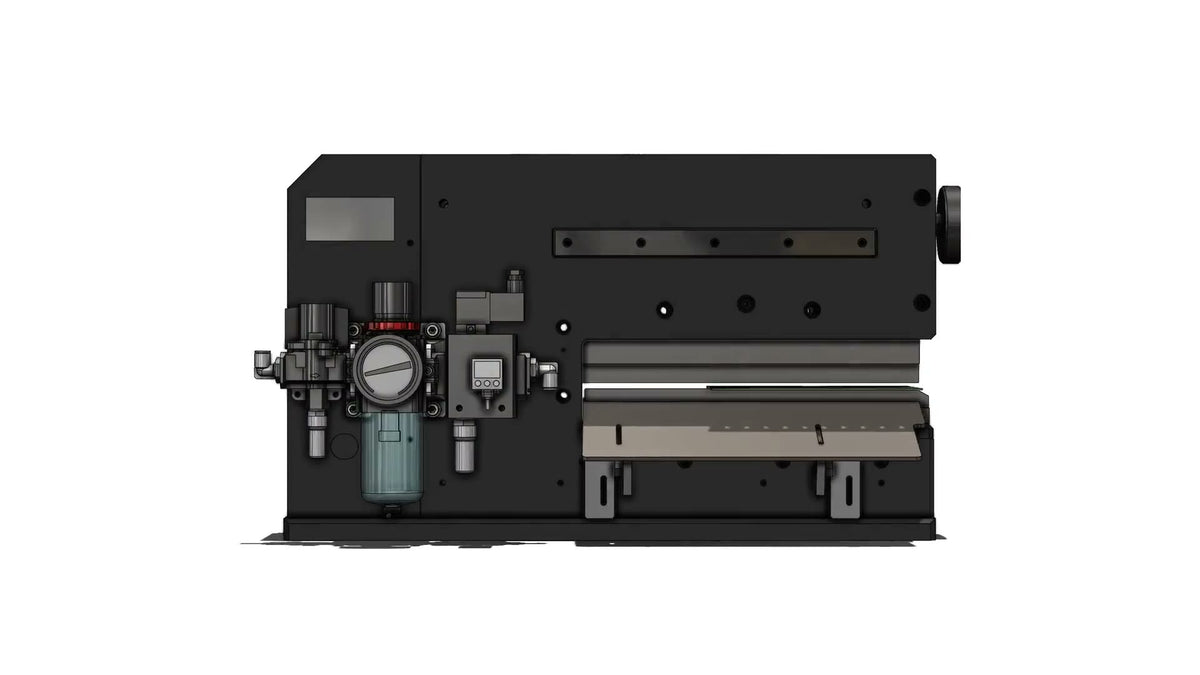
| VPD3-1M manual | VPD5-330 pneumatic | |
|---|---|---|
| Cut | Circular blade over a fixed linear blade, drawn by hand | Two linear V-blades closed by an air cylinder, foot pedal |
| Cut length | 290 mm (11.4″) | 330 mm (13″) |
| Board thickness | 0.6 to 1.9 mm (0.024″ to 0.075″) | 0.6 to 2.54 mm (0.024″ to 0.100″) |
| Parts to the score | 2 mm (0.079″) | 0.5 mm (0.020″), ceramic capacitors included |
| Component height | 33 mm (1.30″) top, 25.4 mm (1.00″) bottom | 20 mm (0.787″) top and bottom |
| Utilities | None: no air, no power | Shop air, 0.4 to 0.6 MPa (58 to 87 PSI); no power |
| Suits | Low mix, repair and prototypes | Production runs, cut after cut |
Both machines arrive with the blades installed and set at the factory, ready to cut. Both are sold by quote, with the ship date confirmed on the quote.
How long do depaneler blades last?
A blade runs up to 100,000 cycles on FR4, and 50,000 or more is typical. Board material, thickness and score depth move that number. A blade dulls slowly: the first signs are a firmer pull on a manual machine and a burr on the cut edge.
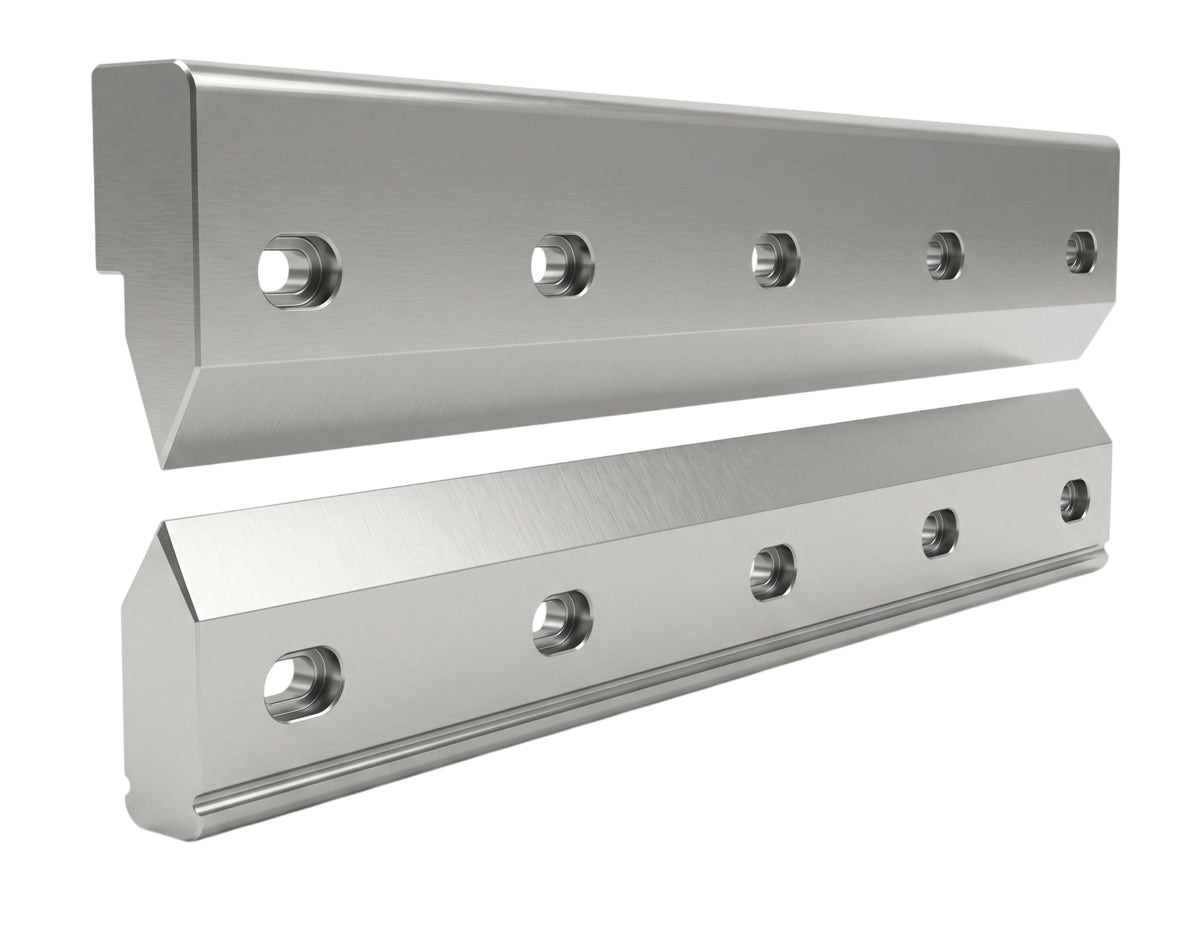
Blades change at the bench, with no service call. Replacement blades are typically in stock and ship from the USA, and custom blades for these two machines are made on request, quoted from your board thickness and score depth. Blade life and when to change a blade covers the four warning signs.
What to look for when you buy a depaneler
- The panel type. V-scored panels go on a V-cut depaneler; tab-routed panels need a router or a punch.
- The longest score line. It has to fit the cut length: 290 mm (11.4″) on the VPD3-1M, 330 mm (13″) on the VPD5-330.
- Board thickness. Check your thinnest and thickest boards against the machine's range.
- Parts near the score. Measure the closest component to the line and the tallest part on each side.
- Volume and operators. A hand-drawn cut suits low mix; a foot pedal keeps both hands on the board through a long run.
- Utilities. The VPD5-330 needs shop air; the VPD3-1M needs nothing.
- Blades you can get. Replacement and custom blades should be easy to order for the life of the machine.
Send the panel size, the board thickness and the closest part to the score, and an engineer confirms the machine before you order.
Questions people ask about PCB depanelers
Is a depaneler the same as a PCB router?
No. A V-cut depaneler shears along a groove that was scored into the panel before assembly. A router mills through the small tabs that hold a tab-routed panel together, with a spinning bit. They suit different panel designs.
Can a V-cut depaneler cut tab-routed or unscored panels?
No. Both of our machines cut pre-scored V-groove panels. For tab-routed or unscored boards, send the board size and thickness and an engineer recommends the method.
Do I need compressed air or power?
The manual VPD3-1M needs neither: no air line, no electrical drop. The pneumatic VPD5-330 runs on standard shop air at 0.4 to 0.6 MPa (58 to 87 PSI), through a regulator and moisture trap, and needs no electrical power.
How close can components be to the V-score?
On the VPD5-330, 0.5 mm (0.020″), ceramic capacitors included. On the VPD3-1M, 2 mm (0.079″).
Can depaneling damage components?
Snapping a panel by hand can, because the bend runs into the solder joints and ceramic capacitors near the score, and the damage may not show until later. A V-cut depaneler shears the score with very little flex. On the VPD5-330 the average board strain, measured with strain gauges, stays under 120 µε.
How long do depaneler blades last?
Up to 100,000 cycles per blade on FR4, and 50,000 or more is typical. Board material, thickness and score depth move that number. Blades change at the bench, with no service call.
Which board thicknesses can a V-cut depaneler handle?
The VPD3-1M cuts boards from 0.6 to 1.9 mm (0.024″ to 0.075″), with the blade matched to the thickness. The VPD5-330 cuts 0.6 to 2.54 mm (0.024″ to 0.100″).
Keep reading
Two V-cut depanelers and the blades that keep them cutting.
Both machines are sold by quote, with the ship date confirmed on the quote, and arrive with the blades set. Blades and spares are typically in stock and ship from the USA.

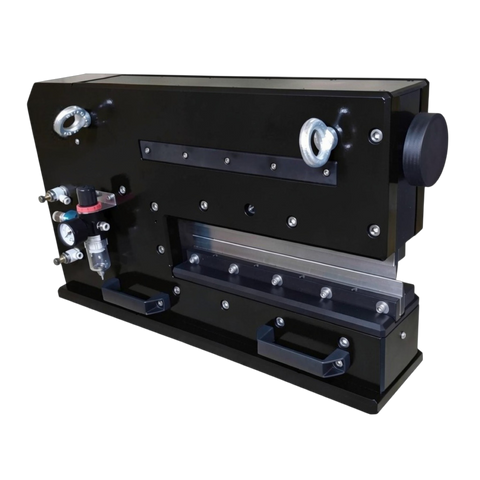
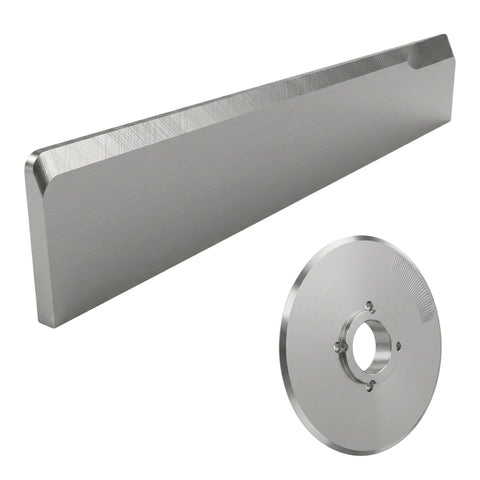

Enter your panel size, or the model you run today, and the finder shows the match.